Rockin the Rockies

Rockin the Rockies
Rock Hounding

Thursday, May 30, 2013

Crystals in Miarolitic Cavities of Lake George Pegmatites

My rock hounding friend and I have returned to Lake George in search of crystals. We've had a slow start to the 2013 season because of the cold and snow we've had this spring. So far we haven't had much success, but perseverance and observation are key to finding the miarolitic cavities that contain the much sought after crystals. The miarolitic cavities or vugs is where the heated mineral enriched liquid cavities within the Lake George pegmatites produce crystals. As the pegmatites and cavities cooled over 1 billion years ago the crystals formed in the solidifying pockets. As the pockets contiued to cool they crack and end the crystal forming process. Due to weathering and other erosion processes many of these now collapsed crystal pockets are near the earth's surface and ready for harvesting. The difficulty in finding the collapsed pockets stems from hundreds of people digging through the pegmatites and finding the easy to get crystals. Sometimes a portion of the pegmatite is exposed to the surface and creates "float" crystals. The crystals are called float because they are on the surface and detached from their source. Inexperienced rock hounds often pick up these float crystals or keys to the location of the crystal pocket without realizing they've not only missed the mother lode, but also erased evidence for others to find the crystal pocket. One prospector at Lake George uses track hoes to dig down over 20 feet into the earth's crust to discover and follow pegmatites opening up crystal vugs. So far this year I have found 4 collapsed vugs with crystals, all within 1-3 feet of the surface. Unfortunately the pockets were small and many of the crystals were either broken or had quartz overgrowth. The breakage can be a result of either the original pocket rupturing under pressure during crystal formation, or the grinding of crystals against each other over millions of years of frost thaw cycles and other erosion processes. I believe the overgrowth of quartz over the smoky crystals is a result of a later infusion of quartz into the vug. This quartz covers the smoky crystals to varying degrees and if not gemmy, hoods the smoky crystals making them somewhat unsightly and not very desirable.  If the hooding quartz is smoky or clear, the crystals are more desirable and are described as phantom smoky crystals as the original smoky is visible through the later quartz hooding. These hooded crystals are highly prized.
This smoky cluster has a lot of overgrowth and is rather unsightly. Too bad the bluish fluorite (lower left) was not larger

A nicer crystal grouping found on Monday... no quartz overgrowth (crystals 1.5-2 inches)

Tuesday, May 14, 2013

Vug Clay at Lake George

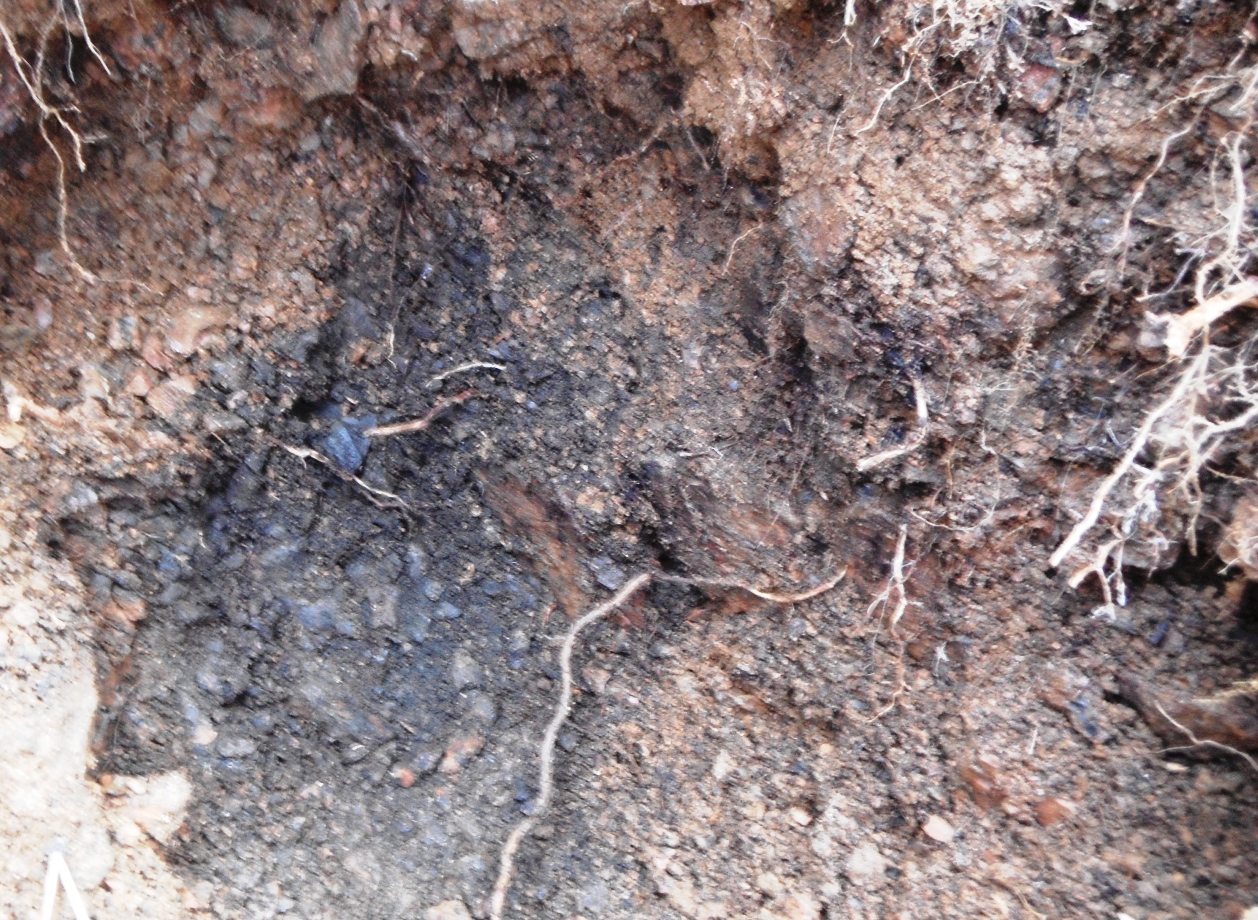
Another day rockhounding at Lake George and another pocket of crystals. This is one of the first times I've run into blackish purple greasy clay in a crystal pocket.  Most often the clay is either reddish (iron-stained) or yellow. I've also run into grayish material. The particular pocket I was in this day had blackish purple clay and the crystals were not very collectible due to breakage and additional quartz overgrowth. I like clear quartz over smokys which gives the illusion of phantoms or ghost smoky crystals, but not the granular/rough opaque quartz overgrowth on smokys. We sometimes say the smokys are hooded when this happens. I got into a discussion with my digging buddy Bob regarding colors of clay and if that has any correlation to the quality of crystals found in the clay.  We both have had very good luck with red clay and poor luck (crystal quality) with blackish purple clay. I'm afraid our sample size is not sufficient to make any conclusions. Anecdotally crystals found in the yellowish clay are harder to clean and the smokys don't seem to have the same lustrous exterior as those found in the red clay.  This got me to thinking is the clay in the pocket from the surrounding material or is the clay a result of the soup left in the miarolitic pocket after crystal formation. Since every pocket I've ever found has been broken imploded/exploded I'm guessing it's a mixture of leftover vug material and surrounding decayed/weathered pegmatite.  I decided to do a search on the internet and not only was there a discussion about clays in miarolitic cavities but it concentrated on the Pikes Peak Batholith see Mineralogy and Provenance of clays in Miarolitic Cavities of the Pikes Peak Batholith, Colorado. by Kile.  While this article was a little above my head scientifically speaking, it seems part of my hypothesis is correct, that the clay is from both the leftover vug material and surrounding weathered pegmatite. The article mentioned the clay varieties smectite, Illite and kaolinite being predominant in the vugs (never knew there was so much to know about clay). The author also mentioned infusion of material from hydrothermal processes after the pockets form. I think some of the fluorites are formed that way. My bigger question was unanswered, does the color of the clay in a pocket have any correlation to the quality of the crystals therein. Does the color of the clay indicate a higher concentration of elements inhibiting crystal formation or luster? Enough investigation for one day. Here are some pictures of the latest dig....
Checking out the latest crystals
A pretty gemmy crystal


Darker area is pocket with broken quartz crystals


Saturday, May 11, 2013

Restaking a claim & late snow at Lake George

A friend of ours has a few claims north of Lake George and he has been sick for awhile. He asked us if we would be willing to restake his claim this year(what are friends for?). Well this turned out to be more work than we thought. Thank god for GPS. We found the first claim marker quite easily, but converting between coordinate systems and searching for vandalized posts was not what we expected. We got two claims restaked, but the weather set us back so that we will have to try again next week. We set out to restake the second set of claims only to be turned back by the weather. We thought there would be snow on the claim but didn't realize the depth and extent of the last snowstorm up in the mountains. Often a snowstorm will hit the front range mountains of Colorado and leave interior mountain areas like Lake George high and dry. Not so with the latest storm as we found out. Our trip was not totally wasted. We determined a field trip near Wilkerson Pass (9500ft) should be cancelled due to snow and instead of restaking claims we rockhounded on a sunny unclaimed area near Lake George (elev 8200ft). Elevation makes quite a difference with spring storms. I even managed to find a pocket of smoky crystals. By midafternoon over half the snow was melted and this helped me find a pocket. The pocket was small and the crystals were beaten up for the most part. Still it was my first find of the year.
Doing the forest service work, this tree has been across the rd for 6+ months!

Marker was thrown by someone into this brush pile. Supporting rock caron was about 50ft away down the hill

Pretty small crystal cache from pocket discovery, couple good ones I think

Still snow at Wilkerson Pass. Temperature was 23F on west side of pass near Hartsel. Time to go back to Lake George where the sun is shining and find those crystals depicted above!

Tuesday, April 30, 2013

Club Field Trips

Our club, the Colorado Springs Mineralogical Society is a great way to get access to otherwise claimed sites and work with others who are more knowledgeable about the minerals on the claim. I enjoy field trips to places I have never been, especially when they are normally inaccessible. In the fall of 2012 our club with the owners permission went to two claims near Salida CO. The Sedalia and Calumet Mines. I'm usually up for any crystal hunting especially when I'm told the crystals could be big. Below are some pictures of various crystals/minerals I collected. Both claims were former mines that took out copper and iron. The mines began operation in the late 19th century and have been mainly closed as viable mining operations since WWII. Below are some pictures of some of the minerals I found. First are pictures from the Sedalia copper mine and then pictures from the Calumet iron mine. You can google these mines and find more historical information on each site or read a little more about them in Voynick's book "Colorado Rockhounding".
Nice goose egg size Almandine Garnet. I found a couple almost the size of 12" softballs.

I think the one just above this caption was about softball size

Fairly large grouping of magnetite

Copper minerals, maybe some Chrysocolla

Actinolite, maybe some magnetite as well.


What follows are some pictures of crystals from the Calumet Mine


Clear quartz on gray background. Epidote inclusions near quartz base

Epidote in Matrix

Nice epidote perched on matrix

Saturday, April 27, 2013

Rockhounding 2013 A New Season Ahead

Well, I hope we have better weather this year than we have had so far. Having completed tax season where I work, I've been patiently waiting for a decent break in the weather to get back to prospecting. I finally ventured forth yesterday with my rock hounding buddy, but the weather chased us off the mountains. We knew it would be touch and go because of the weather forecast and I had hoped we could squeeze in 4 or 5 hours. It was 45F when we started, but periods of light snow and wind finally were enough to make us call it quits. While my digging buddy Bob prospected a nearby hill at Lake George, I decided to redig an area I left off late last fall. There was a seam of quartz and a little yellow mud to follow. Finally the quartz became more prevalent, a seam of clay turned from yellow to reddish brown. Changing colors of clay is always a good sign. Actually any time you find clay with quartz you must dig slowly and with care. After getting through some quartz shards a small pocket opened up with a few collectible crystals. I told Bob afterwards that I can't recall a smaller pocket with 3 inch crystals. I took home only about 5 crystals (1-3inch) crystals and left the rest. It was good to get out, a one mile hike with back pack at 8500 ft was a good first effort for the season. While neither of us found much and the snow and wind made us quit early, it was still good to get out for a few hours.
Mother Nature covered last years dig with water crystals of her own
This is the same crystal below cleaned up some, nice and gemmy with a little character to it. It's always nice to have a little pegmatite with the crystal

Looks promising


Three 2-3 inches crystals ready for cleaning
I look a little ornery this day.... too cold not enough crystals, had to take off 2.5ft of overburden before I got to the crystal containing pegmatite

Friday, March 29, 2013

Prospectors on the Weather Channel -- Season 1


Mt Antero in May 2013... going to be awhile before anybody gets up there this year to prospect

While I enjoy the show and like seeing some of the prospectors/acquaintances working their digs, the show is really not about prospecting or prospectors. Seems to be more about striking it rich and making big money. I was hoping to see some technique from the prospectors, but thus far it's only about finding gems for their value. The only prospecting on the first show was a guy repelling down a cliff. Prospecting involves time, energy and a lot of patience. Digging a pegmatite vein with a track hoe is not prospecting. Doris may have found $250K of smokys with amazonite, but I'll bet he won't realize that profit for years to come, meanwhile between $50K equipment breakdowns and fuel, he has a lot invested. Digging out a pocket of fluorite found previously is not prospecting. Removing rubble from a site where you previously found aquamarine and finding more is not prospecting. I found it interesting that Busse said he had $3000 worth of aquamarine once it was cut. So he really maybe found $500 worth of aquamarine (5 people all day moving boulders by hand at 13,000ft). One definition from Wikipedia: Prospecting is physical labor, involving traversing (traditionally on foot or on horseback), panning, sifting and outcrop investigation, looking for signs of mineralization. I realize I've only seen one episode, and it wouldn't make good TV to see people hiking around in the mountains all day long finding little to nothing, but so far I haven't seen prospectors prospecting. Still it make good television and I will watch every episode I'm sure.
Need to get out and do my own prospecting... still snow on the front range.

Episode III: My opinion hasn't changed much. Although we are getting a little more "real TV" with arguments made up or not between friends and family members. Merging episodes I & II worked okay jumping back and forth with 10 minute segments. Jumping back and forth with 5 minute segments during the last half hour episode didn't work for me, too choppy. Still I am a faithful watcher. I was with Joe and company when they found the "monster pocket" in August, I'm sure I will like the series a lot more if my discussion with Joe didn't get cut ;-)

Episodes IV&V: Certainly the rock slides on Mt Antero would give me pause before I went walking across the mountain. Good thing it didn't happen during the day. The whole idea of digging into the side of a slowly sliding mountain seems not worth the risk to me. Not sure walking around with a lightning rod is a good idea either. Interesting to see the focus on high-graders/thieves. High-graders is a long used generous term for mineral thieves.  I've noticed from the episodes that Amanda has her claim well marked with discovery point clearly in place. I would guess the thieves were watching Amanda dig from an advantageous lookout spot the day before with field glasses and thought they might get some easy pickings. Amanda has had some claim issues before and was almost taken to court, so she isn't totally innocent either. A couple of boys ripped off Dorris a few years ago doing the same thing, only they came at night and walked off with a pocket that Joe had discovered the day before despite him covering it back up with scree. Saw these fellows trying to sell their ill-gotten gains at the Contin-Tail show in Buena Vista a couple of weeks after the theft. I suspected something was wrong as they were the only dealer with uncleaned/dirty crystals. Their prices were even higher than those quoted on Prospectors! I asked them if they had a claim and where they found the amazonite and they said they didn't have to tell me that (kinda lighted up my radar) , I told them as a collector I would want to know the provenance of any crystal prior to purchase. I walked over to the next booth and listened as they discussed how they should respond to a question like mine. They decided the next person to ask such a question should be answered with the Tarryalls. Not too much amazonite ever found in the Tarryalls boys. I related the story to Joe D and gave him a description. Joe said he suspected the same two guys.
 I hope the show with it's inflated prices doesn't encourage more people to try and gain from other people's hard work as some of the other claim owners may not be so lenient.
 Just heard that the BLM which manages much of Mt Antero is none to happy about the Busse's et. al. rolling hundred pound boulders off their claims to who knows where. Somewhat of a safety concern I suppose. I wonder when they reclamate their claims if they'll have to drag those boulder back up that Mtn where they found them.  Hah

Episode VI: Well, the Busse's in a thundersnow storm on Mt Antero didn't look like much fun. I'm pretty sure the risk Frederer is taking to get crystals is not worth it. The show referenced some of the crystals he found years ago down the worm hole. You can check out the picture I posted on 6/19/11 titled Topaz Hunting in the Tarryalls to see one of the large smokys.
See: (http://rockhoundingkw.blogspot.com/2011/06/topaz-hunting-in-tarryalls.html) I heard second hand that Rich shopped the large crystals extensively, even to the Smithsonian, but nobody wanted them for near the price he expected. I believe Newmont Mining(Cripple Creek/Victor) assisted Rich in donating the crystal to the Florrisant museum. The museum is small, but has a nice crystal collection from the local area. Nice to see Frederd looking out for Dorris. Many claim owners look out for each other. The topaz from Joe's claim are truly beautiful. I have been going to that claim on and off for over 10 years on club field trips. Walt Rubeck used to own the claim, but died a few years ago. He donated a number of very nice crystals to the visitor/welcome center in Cripple Creek. These crystals are worth checking out if you are in the area. This new visitors center is just outside of town near the Mollie Kathleen gold mine. Joe lets folks on his claim from time to time either on open dates (check his web site at Pinnacle 5) or through local clubs (supervised of course).  I laugh when I recall a couple of years ago I mentioned to Joe that my wife and I were thinking of doing an article on rock hounding for AAA magazine. See (http://encompassmag.com/2012/12/web-extra-colorado-rocks/) Joe was concerned that the publicity might generate too many interested folks in taking unsupervised samples of topaz from his claim. Another good show. If you want to watch a good prospecting show, check out Ice Cold Gold on Animal Planet. They do real prospecting!

Episode VII:  Glad to see Frederer knows when to quit. Seems to me he needs some real dynamite to blow the granite overhang off the mountain. Maybe too expensive to do it that way though he's a bonafide hard rock miner. Where there is one topaz maybe there are more up the shaft. I did like the way he used the proctologist's camera.  No polyps, just a blue topaz. Back to Mt Antero. More weather moving in on folks not finding much. If Amanda can get $20-$50 a piece for those smokys, I'd like to know where. Kind of surprised Steve didn't put his aquamarine encrusted granite off to the side, though I've lost specimens at digs that way too. Seems to me Joe Dorris has a nice amazonite smoky pocket to show off on one of the last episodes, maybe some more topaz as well. We shall see.... stay tuned. Amanda made the news here again. Evidently while she was camping near Crystal Park. Her former "friend" and deputy sheriff from the city of Fountain got himself arrested by confronting the duo and threatening to kill her current boyfriend (Travis). At least that's how the local news is telling it. Oh well, this is a rock hounding blog not the society page.

Episodes VIII&IX: Finally we see episode 8 and finish the series with 9. I was hoping to be in episode 8, as I was there when Joe D. was pulling out amazonites with smokys, and I was even interviewed. It was fun to see Joe take over the dig from Tim and pull out the amazonite smoky grouping. Just before I arrived at their claim they had found the Bevino twinned amazonite crystal along with a nice amazonite combo all pictured in episode 8.  Then in episode 9 they went back to the same pegmatite and pulled out crystals as big as Tim's head. What an experience that must have been. By my figuring Joe had a $1M+ year in crystal finds. I would guess he sold the best at the Tucson Show. Brancato found little at Mt Antero, but did seem to think he found some nice amazonite at Lake George. It was hard to see the quality of the items he found as they were dirty and seemed damaged. I was a little bemused over Steve's theology and rock hounding. Good to know someone understands God so well. Not sure why Busse's friend from TN wandered off down the mountain without telling anyone, he should have known better. The biggest surprise in episode 9 was Amanda thinking her green fluorite was topaz. It seemed pretty clear to me on my low definition TV that the etched crystal was a fluorite. Nice green though. Maybe the misidentification was for TV hype.

Stay tuned: as Joe Dorris brought his track hoes in this year there were videographers with him every step of the way. I know because my friend got stuck behind them on a dirt road leading to their claim.

Sept 2013 Update: http://www.denverpost.com/news/ci_24041641/reality-show-prospecting-meets-reality-colorado?IADID=Search-www.denverpost.com-www.denverpost.com
Seems only Joe Doris is playing by the rules... not surprising to me. Author makes all the crews look like a bunch of dopes, and maybe they are (except for Joe). If you find minerals on National Forest ground you can't sell them unless properly permitted. If you are not permitted and go on a nationally aired TV program you will get in trouble.

See Prospectors on the Weather Channel -- Season II for my latest opinions


Wednesday, January 16, 2013

Mineral Auction Experiences

Crystal
Unknown Mineral to me sold for $190 (11x3")

With winter firmly entrenched over the Rocky Mountains and temperatures dropping down to -35F in the mountain valleys, I decided to go rock hounding at a local auction house. While the auction itself was on the internet, the minerals were available for viewing locally. The pictures of the minerals displayed on the Internet site were for the most part poorly depicted. Some of the pictures were pixelated when zoomed in on, viewing angles of the minerals were not taken to best show off the specimens and nearly all specimens had only a single picture taken. I decided to go to the small-time auction house and check the minerals for myself. While I intended to get a better look at the crystals there were side bonuses of noting some minerals were misidentified, other minerals had tags with them that weren't mentioned on the internet site. Old price tags are helpful as well. With camera and magnifying glass in hand I closely checked out the minerals. Many unidentified minerals were easily identified as Wulfenite, Citrine, Barite and Pyromorphite. One piece of botryoidal fluorite had a Collector's Edge tag that stated it was fluorite (botryoidal), found in a mine in China and sold for over $100, ten years ago. I turned over a specimen of Wulfenite and found it was from the Red Cloud mine in AZ and sold some time ago for $145. Still yet another specimen had a price tag from 2003 identifying it as Citrine from the Ural Mountains and originally sold for $80. I picked up each one of these minerals for about $20. One consideration when buying from an auction house was the surcharge and state taxes. If the specimens had been properly identified with a little more care I'm sure I would have had to pay much more. It definitely pays to check out small-time auction houses for items they are probably are not used to dealing with. Bargains can be had, treasures enjoyed and profits made. Prior to bidding on any of the specimens I did some homework on the internet and found similar specimens. This allowed me to corroborate mineral types as well as suggested retail prices before putting in any bids. While a few desirable specimens got away from me, the minerals I purchased should easily garner a 400-500% profit for me when I decide to sell them. Below are a few specimens from the internet auction.
 
Crystal
Wulfenite


Crystal
Amethyst

Crystal
Citrine from the Ural Mountains